
Valentine’s Day is around the corner and love is in the air. Apparently approximately 150 million Valentine’s Day cards are exchanged annually, making the second most popular card-sending holiday after Christmas. Woooosahhhhh!
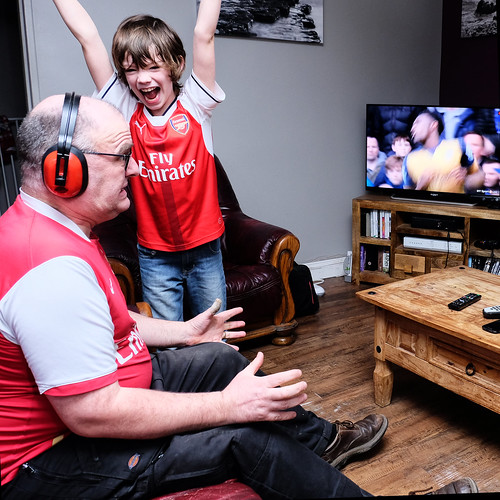
In the spirit of the season I must admit my current romance with Arsenal Football Club. I eat, drink and blog it. But I have an adulterous past.
My earliest relationship with football was born of out total innocence. As a young teenager I fell head over heels with the 1970 world cup winning Brazilians. Almost all were “ballers”, blessed with great technique and molded into one of the greatest teams ever (Apart from Pele, they had Tostao, Rivelino, Jairzinho, Gerson, Clodoaldo, Carlos Alberto, etc). From a distance, it seemed they were dedicated to not simply winning but winning with style. Despite the efforts of the English press to write them off as a soft touch, (“fancy dan foreigners”), they simply out-footballed their rivals in 1968. The highlight was that classic final with the Italians. Being my first football love nothing since can ever equal it.
But as I became older, my affections strayed to the 1974 and 1978 Dutch team, the pioneers of “total football”. Their failure to win a world cup will never erase memories of the then revolutionary concept in 1974 that all eleven players on the field must be technicians capable of playing in multiple positions. Being a love-struck teenager I cried tears when they lost in the finals to what was then called West Germany. Four years later, when they lost to Argentina in the 1978 final, I was already hardened to the vagaries of love. I was partially lusting for the winner to come from the western hemisphere but to be honest I will always share with the Dutch, especially Cruyff, Neeskens, Johnny Rep and company, a feeling of remorse for a great team that twice came to the mountain top but never saw the promised land.
While writing, I recognize that being young I made no commitments when it came to football; I was a serial adulterer. By 1986 I was fully in the camp of Argentina and Diego Armanda Maradona. Now more mature, my politics was beginning to inform my choices. Because of my anti-colonialist and anti-imperialist convictions, I was aching for every possible symbolic revenge against the English after their defeat of the Argentinians in the Falklands War four years earlier. Never did I imagine there would be two singular, unforgettable events in world cup history by Maradona; the “hand of god” goal and the subsequent one-man demolition of Messer Beardsley, Reid, Butcher, Fenwick, Butcher (again), and finally goalkeeper Peter Shilton. Yet in four years my heart was broken when the “god” of football, as he was known in my hometown, had his then immaculate reputation sullied by his being expelled from the 1994 world cup for drug use.
It took me nearly 10 years to once again fall in love with a football team. I was introduced to AFC by a sibling in the 04/05 season, shortly after the Invincible year. By that time I had long immigrated to the US and had been cut-off from football except when the networks did their obligatory coverage the world cup. I even made it to France in 1998 to give my support to Jamaica, my homeland, in their world cup campaign.
But no team moved me like the Gunners once I saw them up close and personal, with the help of satellite tv. I was captivated by Wengerball; slick one-touch passing combinations, speed on the counter-attack, clinical finishing and, best of all, the ability to take on and beat an opponent one-v-one. I was gobsmacked by Bergkamp (when he played), Patrick Vieira and Titi Henry. They reminded me of my first love the 1970 Brazilians; they not only had to win but win with style.
Later we were to learn that Arsene Wenger may have been similarly inspired. In 2014, speaking of the challenge of fitting several #10s in the Arsenal team, he remarked:
“When you look at the Brazil team in 1970 they had Tostao, Rivelino, Pele, Jairzinho, Gerson, Clodoaldo. They all played number ten in their club.
“They didn’t know what to do. They put them all together and they won the World Cup in a convincing way.”
After entering this relationship with AFC I quickly learnt this was no love for the faint-hearted. It became evident by the end of the 04/05 season we were witnessing the break-up of the Invincibles. The owners of the club, with Arsene’s agreement, had undertaken one of the most daring, ambitious projects of any in the premier league; the building of a brand new stadium with a capacity for 60,000 fans at an estimated cost of £390 million. The priority was no longer winning titles but paying for the stadium.
While many fans initially signed on, thinking it would be an easy ride, illusions were soon disabused when the foreign oligarchic owners of Chelsea and later Manchester City started firing £500 notes across the lawn at Highbury, trying to buy the best Arsenal players. In fact they were partially successful as AFC had to sell some of its best assets to pay for its stadium. Those clubs went on to eventually win things while Arsenal relied on project youth and the genius of Arsene Wenger’s management to remain competitive, always in the top-4, always qualifying for the champions league.
Thirteen years later on the eve of Valentine’s Day, I am as in love with Arsenal and Wengerball as I was the first day I saw the gunners gliding over the turf at Highbury to snatch my adulterous affections away. Never in those years was I ever convinced by the faint-hearted, by the cowards and the weak-willed that the manager, who had achieved three-titles and two-doubles prior to my supporting the club, had somehow lost his touch and we were at the end of an era. Despite still being substantially outspent by United, Chelsea and City this season, Arsenal is currently in second place in the league. I am convinced by the unbiased data, if we had not lost out technical leader Santi Cazorla, we would not be so far off the pace and be better positioned to challenge for the title.
I still love you Arsenal, oh yes I do.






 Positively Arsenal