
(This blog is partially inspired by the 160,000+ Australian fans who showed their love for The Arsenal over two games in Sydney this past week. True love is based on shared values.)
Believe it or not football fans, July 1st is the official start of the new football year, at least in Europe. As of June 30th the books were closed on the old year. The turning of the calendar is the start of new beginnings. Players’ contracts expired or advanced one more year. So it did for many administrators and staff who survived the twists and turns of the previous season. Some may have already been collateral damage as owners engaged in the obligatory sacking of managers and their staff mid-season while others had to endure the pain of relegation knowing full well they would not survive the changed economic circumstances of their club.
In such a ruthless economic climate it is a wonder so many fans retain year-in, year out, that undying, innocent, enduring love of their professional football club. It seems to me that as of July 1st, most fans forget the pain, disappointments and frustrations of the past year and begin to look forward to a new year of hope and opportunity, in most cases, somewhat naively in my humble opinion. That is unless you are a bitter Wenger-outer who foresees a dark, bleak world until the Professor is sacked and a bright, new shiny manager is appointed who will immediately outspend United, City and Chelsea and lead Arsenal to a glorious, golden future of unchallenged success in both Premier and Champion’s Leagues.
Apart from such nonsensical delusions by the Wenger-haters, the vast majority of Arsenal fans remain proverbial optimists, ever hopeful that the club will challenge for the title next season. I happen to be among them despite cultivating the image (successfully I hope) of a cold, dispassionate analyst who despairs at our falling possession stats, lack of chances created from midfield, etc.
During my recent vacation, when I finally emerged from the 9-month football bubble that is the Premier League season, I discovered that such optimism is not shared by the average non-Arsenal football fan. In fact, those who are aware of my voluntarily writing a weekly blog for PA think, if not mad then I am clearly delusional. Why should someone in their right mind express such overt support for a football club that came 5th in the League even if they won the FA cup. These same persons by the way, particularly United supporters, are oblivious of the irony that the Red Devils came 6th in the League and only sneaked into the Champions League via UEFA’s consolation prize (Europa title) in one of (Ed.) the dullest finals in football history.
As for being delusional I must admit that, like most of my readers, I am a bit of an obsessive-compulsive. How else do you explain such devotion to a sport and a football club year-round.
I suspect only amateur psychologists would consider the mumbo-jumbo above sufficient explanation for our enduring love and optimism for club. If being an obsessive-compulsive was the underlying reason for the love of our marital partner or significant-other, then how does that explain our neglect of them during the football season. Evidently that obsession must be very fleeting or transient, i.e. anti-obsessive.
Like love of any type, supporting a football club is surely very personal and due to complex reasons. I initially fell in love with the club 13-years ago because Arsenal played beautiful football. Like sex it was not always orgasmic and to be frank there were many, too many, poor games over the years. But the club was always genuinely committed to playing football the right way, even when it had to break-up The Invincibles and sell off several great players to pay for the new stadium. Over time I learnt that the manager had a deep and abiding commitment to beautiful football. In his own words:
“Football is an art, like dancing is an art – but only when it’s well done does it become an art.”
I am convinced that the key to Wenger’s longevity at Arsenal, despite the haters, despite the many disappointments, despite the failure to win a title in 13 years, is his commitment to football as an art. Playing the “Arsenal way” is now a commonly accepted part of football lexicon. Supporters of the club have deep, divisive debates as to whether so and so is an “Arsenal player”. How many other clubs dare hold such discussions and not hold themselves to contempt and rididicule? Can you imagine a United supporter proudly advocating the “Mourinho way”? Or fiercely arging that a 6 foot plus mountain of a man with the first touch of concrete is an ideal “United player”?
While it is easy to disparage him for the recent lack of titles, even though to date he has made Arsenal the 2nd most successful club in the Premier League, it is readily apparent to those who have two neurons and working synapse that Arsene Wenger is building a foundation and a philosophy of playing that will outlast by generations, if not ages. His legacy is in sharp contrast to the the transient work of the many cheque book managers who win titles but contribute nothing to the sustainable future of the football club with which they were entrusted.
Going back to the metaphor of enduring relationships, Arsenal may not flash the most bling, not be the biggest spenders, have the most attractive bod, but it certainly has class and values that can sustain a relationship with its supporters. How else do you explain over 160,000 fans packing one of the largest stadiums in Australia in the recently ended tour of Sydney, to support the club over two games playing against League One level opponents?
Isn’t this demonstration that the values of the club are universally appreciated the wind in our sails as we embark on a new campaign? Players come and go, no matter how famous (note to Alexis Sanchez), strategy and tactics change, but the club stands for something beyond merely winning games. In the words of Arsene:
“I believe that despite all the money a club is about identity. Identity is about values and values have been carried through the generations through somebody. Is it the chairman, is it the manager, is it some players who stay for a long period at the club? I hope it will always be the case. It’s not only about spending money or sacking the manager.
“Football has to be a bit bigger than that. That’s why I believe the big clubs worry about values and identity. We have to be conscious that that is important as well.”
Naught more needs to be said.

 So keep the faith. Ye shall be rewarded.
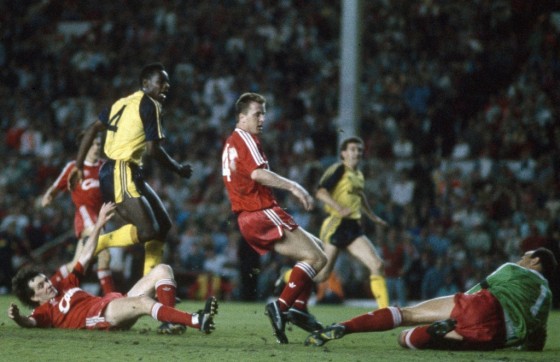



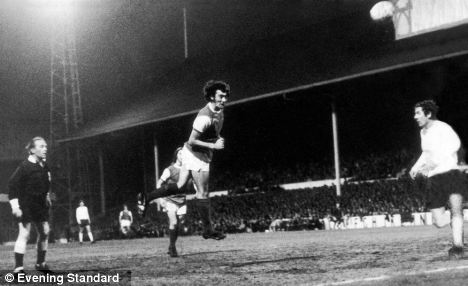
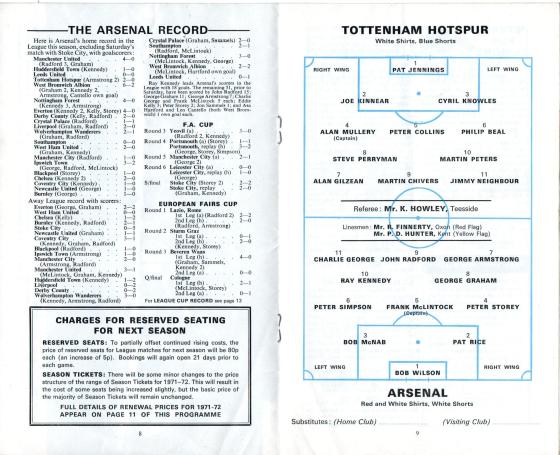 Though the spuds were in 3rd place, there was no doubt that we wanted it more but would goals come? Pulse rate soaring but as long as it stayed goal-less we were OK. Only 3 minutes to go.




 Positively Arsenal