
This is part one of two articles from ArsenalAndrew
There has been some talk in recent days amongst fans and in the wider media of the need for an Arsenal backlash.
For the side to ‘finally’ stand up and be counted, ideally in the most spectacular of fashions.
Preferably, against Spurs, if at all possible.
Well, it equally has to be said – because it is there for all to see – that even in the games that haven’t ended well for us recently, as a general rule, there has always been signs of a beautiful machine about to click into place. Only by the narrowest of margins have passes been cut out and moves broken down. This much has been evident all season long.
And it is this single, simple observation, that goes to the heart of my personal frustration and anger at those who persist with the negative nonsense.
If those same critics were as willing to get behind the team as they are to ignore the progress being achieved by a group of players still getting to know one another, let alone their opponents and the wider demands of the EPL, then I’ve no doubt Arsenal World would be a much, much better place.
We are told in all seriousness by The Ones Who Doubt, that the Arsenal players should know each other’s game inside out by now.
But this fundamentally fails to grasp the finer points of Arsene’s Quantum Football Mechanics which relies on a near telepathic understanding of where one’s team mates will be found at any stage of the play. The absolute killer attacks are not founded on a leisurely survey of the pitch before a pass is played. Players like Emanuel Petit have said they always knew where their colleagues were, pretty much to within a few inches – in Petit’s case he was referring specifically to his playing relationship with Patrick Viera.
These relationships do not gel overnight.
At Man U, Ferguson has had the great good fortune to be in a position to largely manage player exits so that ‘fallow’ periods have been relatively few and far between. It’s not to attack Arsenal to give United credit for this. And it’s equally telling that the loss of a star player – in their case Ronaldo – was just as problematic for them to deal with as it has been for Arsenal to make adjustments in the wake of the Fabregas and Persie departures.
That Ferguson was able to retain the services of the formerly ‘want away’ Wayne, at vast cost to the Mancunian coffers, at a stroke provides as succinct and near perfect illustration of the impact made by the difference in the circumstances between the two clubs in recent years.
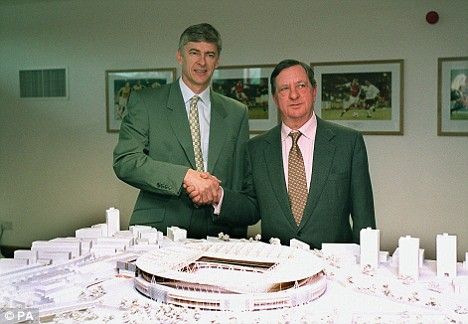
With the benefit of hindsight it’s perfectly possible to suggest Arsenal entered that period (as defined by the club’s new stadium project) financially ‘undercooked’ and in doing so, left themselves vulnerable to player movement on a scale not seen further north.
Or indeed anywhere not involving a club crushed by relegation.
But to condemn Arsenal FC for this is to willfully ignore the impact of two game-changing events that no-one – least of all the club’s harshest critics – predicted.
In some ways one might assume there should be no real need to spell out the effects on Arsenal and it’s wider operating environment when these two developments came to pass.
And yet there appears now to be a widespread failure on the part of many observers – including amongst them, many of the club’s own fans – to properly understand that no conventionally funded club in the world would have been able to withstand with impunity an equivalent double-whammy of the kind that befell our club and its carefully laid plans. To cope with the sudden appearance of two over-funded, under-regulated mega-rivals – a development which crucially coincided with the global Credit Crunch responsible for strangling the club’s access to vital funds at the most critical stage of its post-stadium development. As fluidity within the vital property market all but dried up, so too did our ability to acquire – and retain – the top, top quality players we had only recently grown used to having around.
The arrival of such competitors, their unlimited funds and their propensity towards player ‘theft’ all hit Arsenal at exactly the point our projected funding stream slowed to a trickle.
With our supporters now being asked to pay some of the world’s highest prices to watch home games, the club’s ability to truly compete – and win competitions outright – at the highest levels commensurate to those ticket prices, had been compromised.
And almost fatally so.
How close Arsenal FC itself came, if at all, to some sort of collapse has yet to be fully revealed.
How the club somehow absorbed the attendant pressures will one day form the most remarkable of stories. Certainly, not one you could make up.
From Fever Pitch to Boiling Point, it’ll be another best seller, some day.
Part 2 of this article will appear on Positive Arsenal in the next few days and takes a look at what happened next …






 Positively Arsenal