A continuation of the 3 part ownership series by @Gooner_optimist. Some of you might already be well versed in the knowledge of what transpired to bring us to the current situation, and if you do, feel free to skip this piece.
Continuing on from my first post about Arsenal’s Ownership, let’s jump straight into what were the reasons for David Dein’s fallout with the rest of the board? There are several theories but as I understand it, it is down to two main differences. First, it is well known that he preferred that the club move to the Wembley and lease it out instead of building a new stadium, something that was opposed by the rest of the board, especially Danny Fiszman. Second, he saw Abramovich changing the equation at Chelsea and sought to adopt a similar external investor approach by introducing Stan Kroenke to the board. However the board at the time refused this move due to their wariness at the time toward American investors after seeing the goings on at United and Liverpool with the same (“We don’t need his sort”).
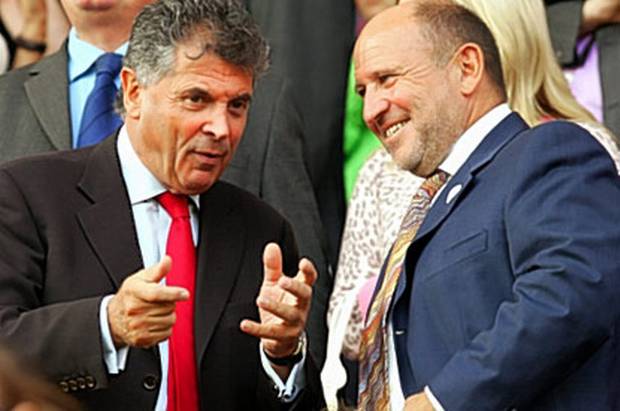
These differences and more led to his ousting and while there are many positives and a few criticisms of David Dein we will not get into them here lest this debate turn into a “bring Dein back” one that features frequently in Arsenal discussions these days. His mention in this blog ends with his ousting from the board in 2007, when he sold his shares in Arsenal to Alisher Usmanov for a nice little sum of £75 million. Interestingly you could conclude that this current tussle between two owners that we see right now is partly down to Dein himself creating it.
While the fallout between Dein and the rest of the board was continuing, Kroenke was picking up a few shares of his own by purchasing the 9.9% holding that was with ITV subsidiary, Granada, and slowly building up his shareholding. Fast forward in history again to 2011, a time when Danny Fiszman, a man who was Arsenal through and through, was suffering from throat cancer and his failing health meant that his shares in Arsenal needed to be sold. By this time, both Kroenke and Usmanov had managed to pick up shares over time to get very close to the 30% mark, the achievement of which would mean they were obliged make a takeover bid for all shares.
The decision of who to sell shares to, in my opinion, was partly down to the board warming up to Kroenke in time. I believe he was the one who most convinced the board that he would let the club continue in line with its historical principles, especially that of being self sustaining. These defined the long term plan of the club as well at the time as the goal was to achieve success the hard way, using our own resources instead of relying on an external benefactor. On the other hand, there is also a chance that the sale might have been governed to an extent by the aftermath of the fallout with Dein and to keep the one he sold to (and had strong links with) at arm’s length.
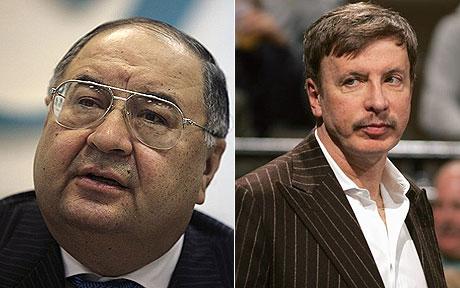
Thus it came to pass that Fiszman sold his 16% of shares in Arsenal to Kroenke, 2 days before his death, and Kroenke launched his takeover bid as he was required to upon crossing the 30% threshold. Usmanov, as the other largest shareholder was entitled to provide a counter offer to Kroenke’s and allegedly placed an offer that was higher than Stan’s. For a board that often gets accused of chasing profits, an important question needs to be asked here, why didn’t they go for the bigger money offer? Why did absolutely NO ONE sell to Usmanov? Why instead did Stan become the majority owner with over 60% stake in the club by adding shares from Fiszman, Lady Nina Bracewell and Peter Hill-Wood etc?
Another thing is that the board is questioned about is how much (or how little) they care for the club and its long term future. On one hand, this is rather odd when you consider that the likes of Peter Hill-Wood and Ken Friar have been on the board for many years, whether it’s the successful Graham years or the even more successful Wenger ones. They were also the deciding factor in giving us our amazing stadium, the revenue from which, helps keep us competitive. To accuse them of suddenly not caring or not having the club’s best interests at heart after all these years might be a bit harsh.
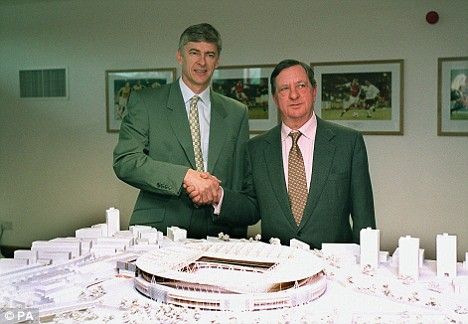
This leads me to the last point regarding why they might not have sold to Usmanov, and that’s a simple one, that someone like him shouldn’t be anywhere near our club which prides itself on its integrity and class. Why you ask? I’ll save that for the next and final post in this series that will form my main argument about why we need to keep Usmanov far away from our club.



 Positively Arsenal